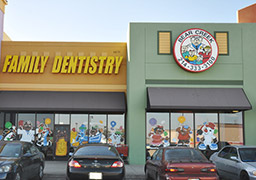
June 8, 2026 · Bear Creek Family Dentistry
General vs. Specialist: What Makes Bear Creek Family Dentistry Different?
When you’re looking for dental care in Dallas, one of the first questions you’ll run into is whether you need a general dentist or a specialist—and whether a single practice can actually handle both. The short answer is that a well-equipped general dental practice can manage the majority of what most patients need, from cleanings and fillings to crowns, extractions, and even some orthodontic work, while referring to specialists only when a case genuinely calls for it. Bear Creek Family Dentistry is built around that model: broad clinical capability under one roof, with clear referral pathways when specialty care is the right call.
Understanding the difference between these two types of providers helps you make smarter decisions about your care—and helps you avoid both under-treatment (skipping procedures you actually need) and unnecessary specialist visits that add cost and scheduling friction.
What General Dentists Actually Do—and What Specialists Handle
A general dentist completes four years of dental school after undergraduate education, which covers the full spectrum of oral health: diagnosis, prevention, restorative work, basic oral surgery, and more. They are licensed to perform a wide range of procedures and serve as the first point of contact for most dental concerns.
Dental specialists, by contrast, complete an additional two to six years of residency training in a narrower field. The American Dental Association recognizes twelve dental specialties, including:
- Orthodontists – alignment of teeth and jaws, braces, clear aligners
- Oral and maxillofacial surgeons – complex extractions, jaw surgery, implant placement in complicated cases
- Periodontists – advanced gum disease treatment, surgical gum procedures, implant specialists
- Endodontists – root canals, especially complex or retreatment cases
- Pediatric dentists (pedodontists) – children’s dental care, behavioral management
- Prosthodontists – complex restoration of missing or damaged teeth
The key word in that list is complex. A general dentist can perform root canals—most do, routinely. A general dentist can place implants if they have the training. A general dentist can treat gum disease at most stages. When a case moves beyond the scope of what that dentist is trained and equipped to handle confidently, a referral to a specialist is the appropriate and ethical move.
The distinction isn’t always about what general dentists can’t do—it’s about what they’ve chosen to focus on and invest in clinically.
Why the General vs. Specialist Question Matters for Families
Families have particular reasons to pay attention to this question. When you have children, parents, and grandparents all needing dental care, constantly routing different family members to different offices adds real friction. Kids need different approaches than adults. Older adults often have more complex restorative needs. A practice that can see everyone—and coordinate their care in one place—reduces the scheduling burden considerably.
For patients in Dallas, geography also plays a role. Depending on the part of the city you’re in, specialty dental offices may require a meaningful commute or a wait of several weeks for an appointment. If your general dentist can handle most procedures in-house, that’s time and travel you don’t have to spend.
There’s also a continuity-of-care argument. When your general dentist has seen your X-rays, knows your dental history, and has been watching a tooth or an area of your gums over years, they understand your situation in a way that a specialist seeing you for the first time does not. That context matters when making treatment decisions. A specialist consult adds a second opinion and deep technical expertise—but it doesn’t replace the longitudinal relationship a general dentist builds with a patient.
How Bear Creek Family Dentistry Fits Into This Picture
Bear Creek Family Dentistry operates as a general dental practice, which means the team handles the full scope of day-to-day dental needs: preventive exams and cleanings, digital X-rays, fillings and tooth-colored restorations, crowns and bridges, tooth extractions (including most routine wisdom tooth cases), teeth whitening, and more. The practice sees patients across age groups, making it a workable option for families who want everyone treated in one location.
When a case calls for specialist involvement—say, a complicated surgical extraction, advanced periodontal surgery, or an orthodontic situation that requires specialist oversight—the practice refers out rather than attempting procedures outside the appropriate scope. That’s not a limitation; it’s a sign of clinical judgment. A dentist who knows what to refer is as important as one who knows what to treat.
Appointments at Bear Creek Family Dentistry follow a fairly standard structure. A routine cleaning and exam typically runs 45 to 60 minutes for an adult with no significant concerns. A filling appointment is usually 30 to 60 minutes depending on the tooth and the extent of decay. More involved work—crown preparation, extraction—may require an hour or more. The practice makes a point of walking patients through treatment plans before work begins, so there aren’t surprises about what’s planned or what it costs.
The practice is reachable at (888) 676-2327 and offers online scheduling at /schedule.
When a Specialist Is Actually the Right Call
There are situations where you should see a specialist, and a good general dentist will tell you so directly. If you have severe periodontal disease with significant bone loss, a periodontist’s surgical options may produce better outcomes than what a general practice can offer. If you need jaw surgery to correct a bite issue, an oral and maxillofacial surgeon is the appropriate provider. If you have a complicated root canal anatomy that previous treatment has complicated, an endodontist has the magnification equipment and case volume to handle it more reliably.
Implants are a case worth addressing specifically, because the answer isn’t simple. General dentists with implant training can place and restore implants in straightforward cases. Complex cases—those involving significant bone grafting, proximity to nerves, or compromised healing environments—are often better handled by an oral surgeon or periodontist for the surgical phase, with the general dentist restoring the implant afterward. Whether a given case is straightforward or complex is something to discuss with your dentist directly.
The takeaway: if your general dentist recommends a specialist, that recommendation is worth taking seriously rather than shopping around until someone agrees to treat you in-office.
Frequently Asked Questions
Can a general dentist do everything a specialist can? No—and they shouldn’t claim to. General dentists are trained across a wide scope of procedures, but specialists complete additional residency training focused on a narrower area. A general dentist handles the majority of what most patients need. Cases with higher surgical complexity, unusual anatomy, or advanced disease progression are typically better served by the appropriate specialist.
How do I know if I need a specialist or if my general dentist can handle my situation? Ask your dentist directly: “Is this something you handle routinely, or would a specialist get me a better outcome?” A dentist who answers that honestly—even when the honest answer means referring you out—is one you can trust.
Does seeing a general dentist cost less than seeing a specialist? Often, yes. Specialists typically charge more for their services due to their advanced training and narrower focus. If a general dentist can treat your condition appropriately, you may pay less than you would at a specialty office. However, cost shouldn’t be the deciding factor when clinical complexity genuinely warrants specialty care.
Can Bear Creek Family Dentistry see my whole family, including young children? Bear Creek Family Dentistry sees patients across age groups. If you’re unsure whether the practice is the right fit for a child with specific behavioral or medical needs, calling ahead to discuss is the best approach—(888) 676-2327.
What if I was referred to a specialist and want a second opinion from a general dentist? You’re entitled to a second opinion on any treatment recommendation. If a specialist has proposed a procedure and you want another perspective, scheduling a consultation at a general practice is reasonable. Just bring your X-rays and any records so the dentist has the information needed to give you an informed view.
Ready to schedule or have more questions? Book an appointment online or call Bear Creek Family Dentistry at (888) 676-2327.