June 8, 2026 · Bear Creek Family Dentistry
Is Your Child Ready for Their First Dental Visit? Here's What to Expect in Dallas
Most pediatric dentists and the American Academy of Pediatric Dentistry recommend scheduling a child’s first dental visit by age one, or within six months of the first tooth appearing — whichever comes first. That timing surprises many parents, but the goal isn’t to drill or fill anything. It’s to catch early problems before they become bigger ones, get your child comfortable with the environment, and give you practical guidance on cleaning those first teeth at home.
If your child is approaching that milestone and you’re not sure what to expect, here’s a straightforward walkthrough of what a first visit actually looks like and how to prepare.
When Should a Child’s First Dental Visit Actually Happen?
The short answer: earlier than most parents expect. By the time a child turns one, their mouth already has enough going on to warrant a professional look. Baby teeth can develop cavities. Gum tissue can show early signs of irritation. Habits like prolonged bottle use or pacifier dependence can already begin to affect jaw development.
Waiting until age three or four — which used to be the common advice — means years of potential issues go unmonitored. Parents also miss the window to learn proper infant oral hygiene techniques at the time they’re most useful.
For many Dallas families, the first visit slips through the cracks simply because nobody reminded them it needed to happen so early. Pediatricians sometimes bring it up; often they don’t. If you’re reading this because your child is two or three and hasn’t been seen yet, that’s okay — just schedule soon rather than waiting longer.
What Happens During a First Dental Visit for a Child
A first visit for a very young child (12–24 months) looks quite different from what adults experience at their own cleanings. Here’s what typically happens:
A brief oral exam. The dentist will look at the teeth that have come in, check the gum tissue, and assess the bite. For infants, this often happens with the child lying back across the parent’s lap and the dentist sitting knee-to-knee with you. It’s a low-key setup designed to keep the child from feeling overwhelmed.
A cleaning, if practical. Depending on the child’s age and cooperation, a hygienist may do a gentle cleaning. For very young toddlers, this might just be a wipe-down with a soft cloth or a brief pass with a toothbrush. The emphasis is on making the experience positive, not on performing a full adult-style cleaning.
Fluoride application. For children who have visible teeth, a fluoride varnish is often applied. It takes about 30 seconds, doesn’t require the child to sit still for long, and provides a meaningful protective benefit between visits.
X-rays. These are not routine at a first visit for most toddlers. As children get older — typically around age three to five — the dentist may take a first set of X-rays to check for decay between teeth that aren’t visible to the naked eye.
A conversation with you. This part is just as important as the exam. The dentist will ask about feeding habits, pacifier or thumb use, how brushing is going, and any concerns you have. You’ll get specific recommendations, not generic advice, based on what’s actually going on with your child’s teeth.
The whole appointment typically runs 30–45 minutes for a toddler’s first visit.
How to Prepare Your Child (and Yourself) Beforehand
The biggest factor in how a first visit goes is the preparation you do at home in the days before. Kids pick up on parental anxiety fast, so your approach matters.
Talk about it casually. Mention the appointment in passing, keep your tone neutral, and avoid making it a big deal in either direction — no overblown excitement, and definitely no warnings about what might happen if they don’t cooperate. Simple is better: “We’re going to see the dentist so they can count your teeth.”
Read books or watch videos. There are a handful of children’s books specifically about going to the dentist that normalize the experience. Even a short YouTube video showing a friendly child’s dental visit can help a toddler know what to expect visually.
Practice at home. Let your child open their mouth while you count their teeth with a flashlight. Let them hold a toothbrush and look in your mouth. Familiarity with the general setup reduces the strangeness of having someone look inside their mouth.
Bring comfort items. A favorite stuffed animal or small toy is usually welcome. Let your child hold it during the exam.
Schedule smart. Book the appointment at a time of day when your child is typically rested and in a decent mood. A late-afternoon appointment after a skipped nap is a recipe for difficulty.
One more thing: be ready for the visit not to be perfect. Some children cry. Some clam up. Some are total champs. All of those outcomes are normal, and a good pediatric-friendly dental team expects the full range.
What to Expect at Bear Creek Family Dentistry
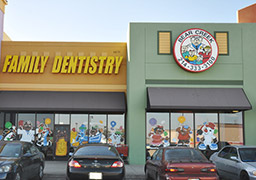
At Bear Creek Family Dentistry in Dallas, first visits for children are built around the idea that the appointment itself is part of the treatment — specifically, treatment for dental anxiety before it has a chance to develop.
The goal isn’t to rush through an exam. It’s to make the environment feel manageable for your child so that every future visit is a little easier than the last. That might mean spending part of the appointment just letting your child look at the tools and understand what they do, rather than immediately getting to work.
Parents are welcome to stay with their child throughout the appointment. For very young children, that’s not just welcome — it’s expected. You’re part of the process, not a bystander in the waiting room.
After the exam, you’ll leave with specific takeaways: what you saw today, what to watch for, and what to do at home. If there’s something that needs to be addressed — early decay, a concern about bite development — you’ll know about it before you leave and have a clear sense of next steps.
You can schedule your child’s first visit at Bear Creek Family Dentistry by calling (888) 676-2327 or by using the online scheduling form.
Building a Long-Term Relationship with the Dentist
One thing the first visit accomplishes that’s easy to overlook: it establishes a baseline. The dentist now has a record of what your child’s teeth looked like at age one or two. Future visits can be compared against that baseline to catch changes early.
It also starts building familiarity. A child who sees the same dental team every six months from age one is far less likely to develop dental anxiety than a child who walks into an unfamiliar office for the first time at age seven with a toothache. Dental fear in adults often traces back to a first experience that was unexpected, painful, or both. Routine early visits short-circuit that pattern.
For Dallas families who plan to stay in the area, establishing care at a practice early means you’re not scrambling to find someone new when a problem comes up. You already have a relationship, the office has your child’s records, and your child recognizes the space.
Frequently Asked Questions
At what age should a child have their first dental visit? Most guidelines recommend the first visit by age one, or within six months of the first tooth appearing. This allows the dentist to monitor early tooth development, catch any problems before they progress, and give parents practical guidance on home care.
What if my child cries or won’t cooperate during the appointment? This is normal and expected. Dental teams who work with young children are trained to handle it. A first visit that involves some tears is still worth having — the experience itself helps a child learn that dental visits are survivable, which makes future visits easier.
Do toddlers really need X-rays? Not necessarily at the first visit. X-rays are typically introduced later, around age three to five, or when the dentist has a specific clinical reason to take them. The decision is based on what’s visible during the exam and the child’s individual risk level for decay.
How often should children see the dentist after the first visit? Every six months is the standard recommendation for most children. Some children with higher cavity risk may be seen more frequently.
My child is three and has never been to the dentist. Is it too late to start? No. The ideal window was earlier, but the right time to start is now. An initial visit at three or four is still well before most childhood dental problems become serious, and it gives you plenty of time to establish good habits before school age.